Showing posts with label Global warming. Show all posts

Sunday, December 05, 2010

Global warming and galactic superwaves

CfA astronomer Doug Finkbeiner, together with two of his students, Meng Su and Tracy Slatyer, used NASA's Fermi Gamma Ray Telescope to study the diffuse gamma ray emission. They revealed humongous bubbles of high energy emission protruding about 50,000 light-years above and below the galaxy, and centered on its nucleus. Recently, it was confirmed independently from IBEX observations, the Sun going to enter soon a million-degree galactic cloud of interstellar gas.
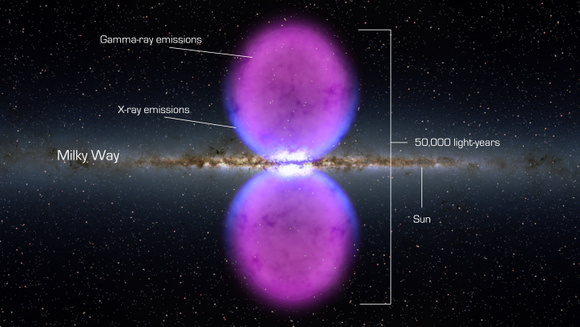
http://www.universetoday.com/wp-content/uploads/2010/11/Fermi_bubble_art_labels.jpg

At the time of this prediction, astronomers believed that the cores of galaxies, including our own, become active ("explode") about every 10 to 100 million years and stay active for about a million years. Since our own Galactic core presently appears quiescent, they believed it would likely remain inactive for many tens of millions of years. Although in 1977, astronomer Jan Oort cited evidence that our Galactic core has been active within the past 10,000 years. In Ph.D. dissertation, Paul LaViolette hypothesized that galactic core explosions recur about every 10,000 years and last for several hundred to a few thousand years. He was the first to suggest such a short recurrence time for galactic core explosions and that our own Galactic core undergoes Seyfert-like explosions with similar frequency. In 1983 Paul LaViolette presented evidence to the scientific community indicating that galactic core explosions actually occur about every 13,000 - 26,000 years for major outbursts and more frequently for lesser events. The emitted cosmic rays escape from the core virtually unimpeded. As they travel radially outward through the Galaxy, they form a spherical shell that advances at a velocity approaching the speed of light.


LaViolette's research suggests that the Sun also became highly active as dust and gas falling onto its surface induced extreme flaring activity. Together with the radiation influx from the Sun's dust cocoon, this caused the Sun's corona and photosphere to inflate, much as is observed today in dust-choked stars called "T Tauri stars." These various solar effects caused atmospheric warming and inversion conditions that facilitated glacial growth which brought on ice age conditions. On occasions when the solar radiation influx to the Earth became particularly high, the ice age climate warmed, initiating episodes of rapid glacial melting and continental flooding. There is evidence that one particularly tragic solar flare event occurred around 12,900 years ago during a period when the Sun was particularly active. This involved the release of an immense coronal mass ejection which engulfed the Earth and induced a mass animal extinction. Details of this scenario are described in Paul LaViolette's book Earth Under Fire as well as in a series of journal articles he has published. Astronomical observations show the last major Galactic core explosion occurred as recently as 10,000 to 15,000 years ago.
LaViolette has an analysis of this evidence of a superwave event on his blog (YT video). The geometry of the bubbles coincide with a superwave event occuring approximately 26000 years ago, which is supported by evidence in the ice core record. Data obtained from polar ice core samples show evidence of this cosmic ray event as well as other cosmic ray intensity peaks from earlier times.

Saturday, December 12, 2009

Don't Blame Cows for Climate Change

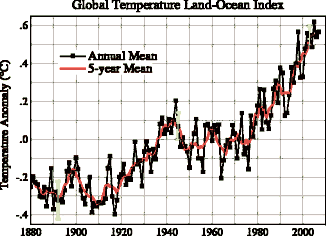
Global warming (GW) is well proven complex of climate changes, which manifests mainly by increase of area of deserts and by glacier melting in latest 50 - 70 years.


Because thermal capacity of oceanic water is at least 5.000x higher, then this one of atmosphere, global mean temperature of atmosphere is much less relevant, then the global mean temperature of ocean.  And this temperature is still raising in accordance to increase of carbon dioxide concentration, despite the weak slow down of warming of atmosphere in recent decade.


Other phenomena, like increase of global temperature of atmosphere aren't so relevant for GW, because they undergo El-Nina / El-Nino cycle and solar cycle due the wobble of center of mass in Sun-Jupiter system (because mean solar cycle is faster then Jupiter period, it's probable, some other planets are affecting it, too). The center of mass controls the direction of global current of plasma beneath surface of Sun, which affects the frequency of sun spots (i.e. magnetic bubbles in plasma, raising to surface) and solar eruptions. The charged particles of solar wind penetrating the atmosphere of Earth are serving like condensation nuclei of fog and snow and they're making Earth surface more reflective.

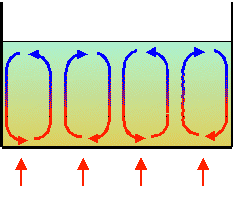
The effect of ocean heating is not so straightforward. In general, it increases the number of convective cells in our atmosphere and frequency of their switching in similar way, like during heating of water in open vessel. Note that this change increases continental character of the weather, so that above continents the global warming may even lead to temperature records on both sides of temperature scale.
At the moment, when convective circulation switches from horizontal to vertical, an ice age period may occur, because Earth becomes intensively cooled. This is forced by hysteresis, because snow-white surface of Earth becomes more reflective at the same time. Just after cooling of oceans (which takes some time due their thermal capacity) the warm period is restored. Here are some indicia, the start of ice age can be very fast (compare the disaster movie Day after tomorrow) and period of fast paced global warming had preceded this event in younger dryas period, so maybe we are facing ice age soon.

Concerning the hypothesis of man made global warming, it's proven statistically, people are making weather warmer and drier on per week basis (1, 2), so no further evidence is necessary - we can just extrapolate these weekend fluctuations to decades of years.  During last warming periods the rise of carbon dioxide followed warming with delay of many decades with compare to present situation - so we can see this argument of many skeptics rather as another evidence for man-made origin of global warming. In addition, we can consider for example September 11, 2001 climate impact study. Measurements showed that without contrails, the local diurnal temperature range (difference of day and night temperatures) was about 1 degree Celsius higher than immediately before.

In my opinion, human activity started irreversible process, which couldn't be reversed so easily due the hysteresis described above. Nevertheless, we should save money from carbon dioxide taxes for faster research of alternative energy sources to replace fossil fuel as soon, as possible. This would be useful with respect to both prevention of ice age period, both prevention of another rise of carbon dioxide concentration. Carbon dioxide dissolves the shells of coral and plankton, thus destroys the fishing grounds and diversity of biosphere.

But the main risk of fossil fuel depletion is the global nuclear war for the rest of their sources. It's generally ignored, the reason of the recent oil & food price crisis was always lost USA war. These wars are very expensive and at the case of global nuclear conflict the things would get even way, way worse.

Concerning the rise of carbon dioxide, assigned to farming of poor countries, often neglected point is, many animals are able to collect proteins from life environment more efficiently, then the agricultural plants by using of solar radiation, because they can consume even the plants growing in wild, which people cannot. Which is the reason, why people in rain forests, deserts or arctic areas are feeded by meat preferably - the farming of moose is apparently more economical and therefore ecological(!) there, then the growing of plants.

For example, for production of rice it's required 2552 m³ of water/ ton rice, whereas for production of one ton of poultry 3809 m³ of water its required. Therefore the consumption of poultry may sound like ineffective waste of water for someone - but the content of proteins in rice is ten times lower, then in chicken meat! This explains, why people from deserts in Chad or Mongolia are living from pasturage, instead of agriculture. I even suspect, farming is more ecological then the agriculture as a whole, providing it doesn't use agricultural products (which usually does). Methane released by cows on pastures is negligible with compare to amount of methane, released by annual decomposition of plants without cows.

"Those who do not think about the future, do not deserve to have one."